


Applied BioPhysics – Consumables

Applied BioPhysics – Consumables

Cultureware

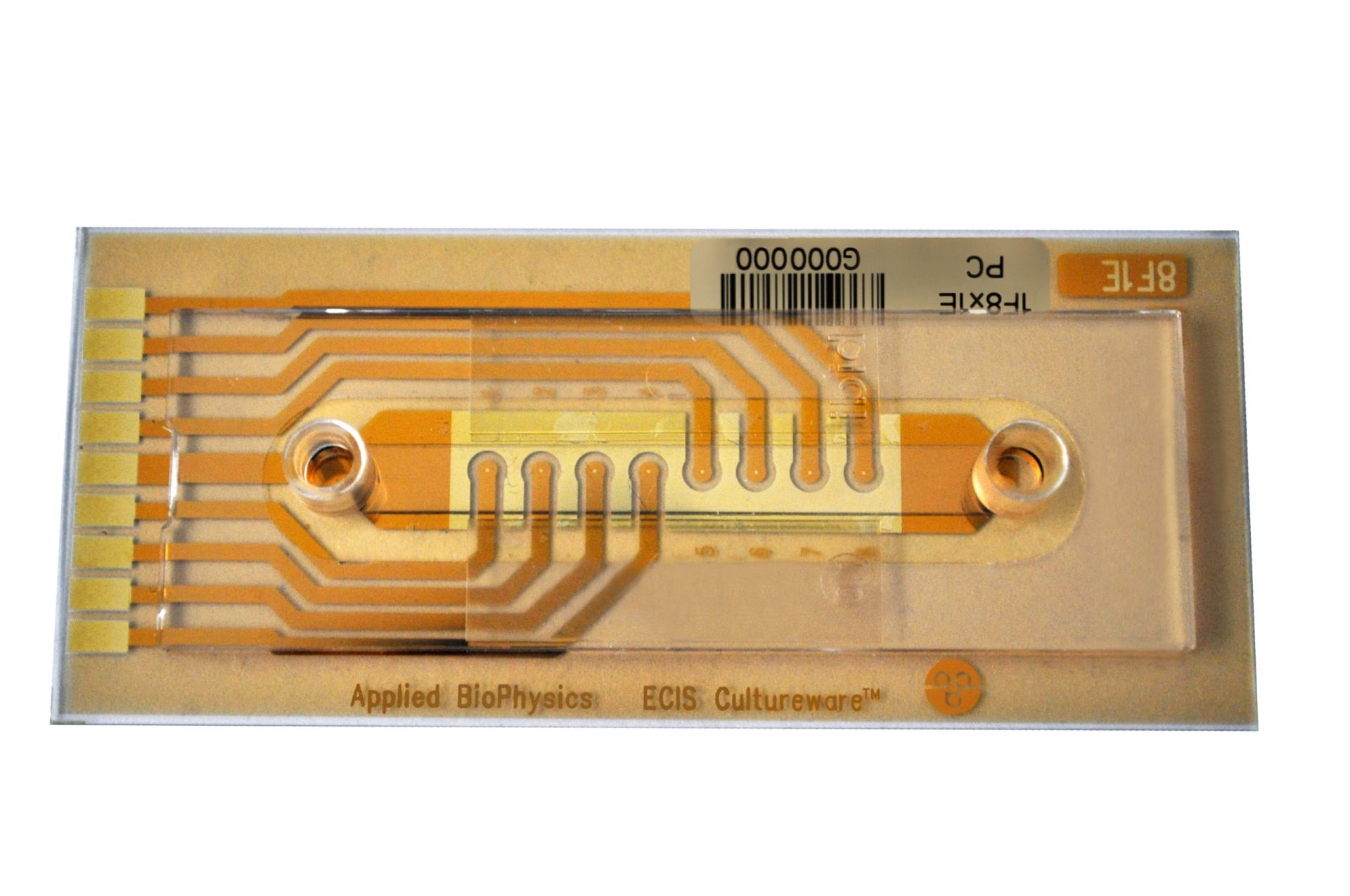
ECIS® Cultureware from Applied BioPhysics consists of sterile disposable electrode arrays containing gold film electrodes delineated with an insulating film. The well top assembly is made of polystyrene. The gold layer is thin enough to allow microscopic observation of the cells using a standard inverted tissue culture microscope. The ECIS® electrode array is placed in an array holder located in the incubator.

Standard 8-Well Arrays

  • 8W1E PET or PC
  • 8W10E PET or PC
  • 8W10E+ PET or PC
  • 8W20idf PET

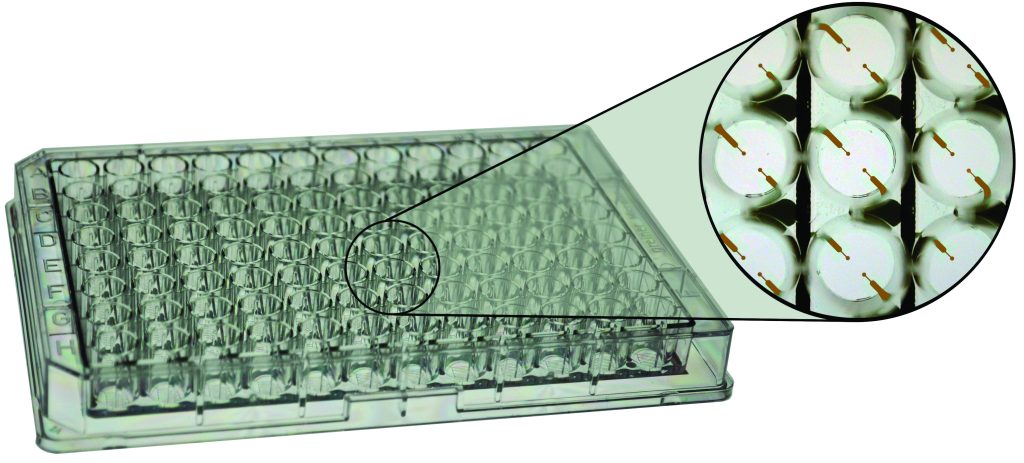
Standard 96-Well Arrays

  • 96W1E+ PET
  • 96W10idf PET
  • 96W20idf PET

Special Arrays

  • Medusa Array
  • 8W1CXE PET or PC
  • 8W2LE PET or PC
  • 2W4x10E PET

Flow Arrays

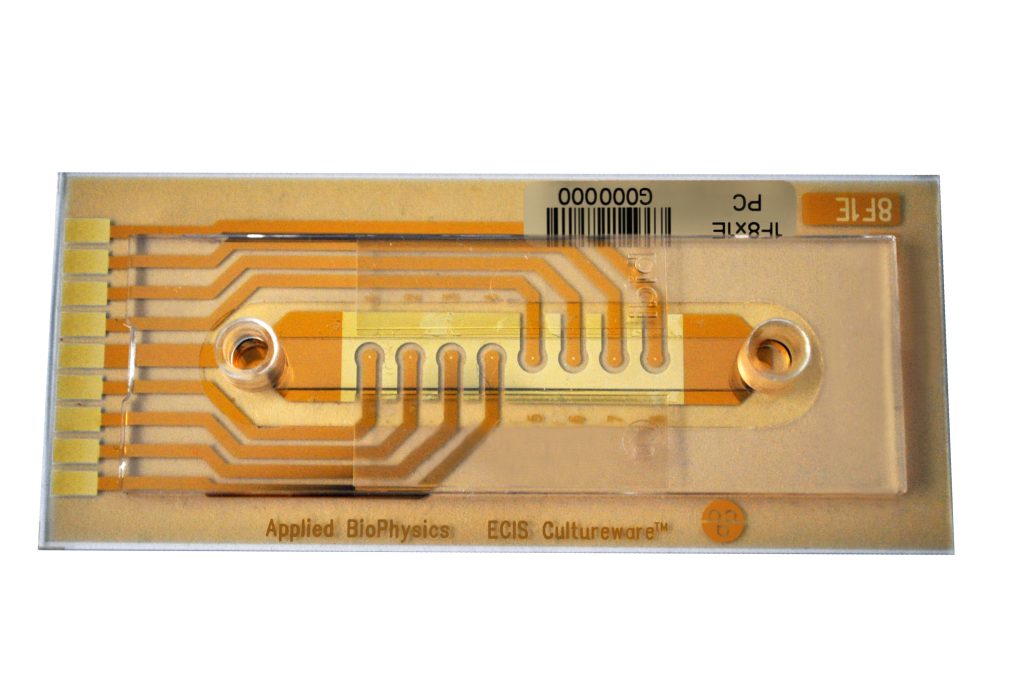
  • 1F8x1E PC
  • 1F8x10E PC
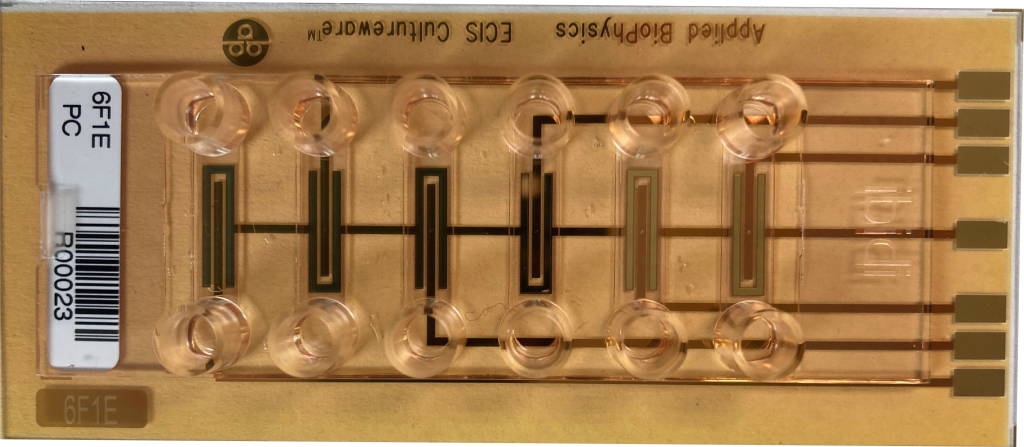
  • 6F1E PC
  • 6F10E PC
  • 1F2Y8x10E PC
  Click here to download our complete brochure about the products from Applied BioPhysics. Customized Arrays are also possible. Please contact us for more information regarding this service.

Standard 8-Well Arrays

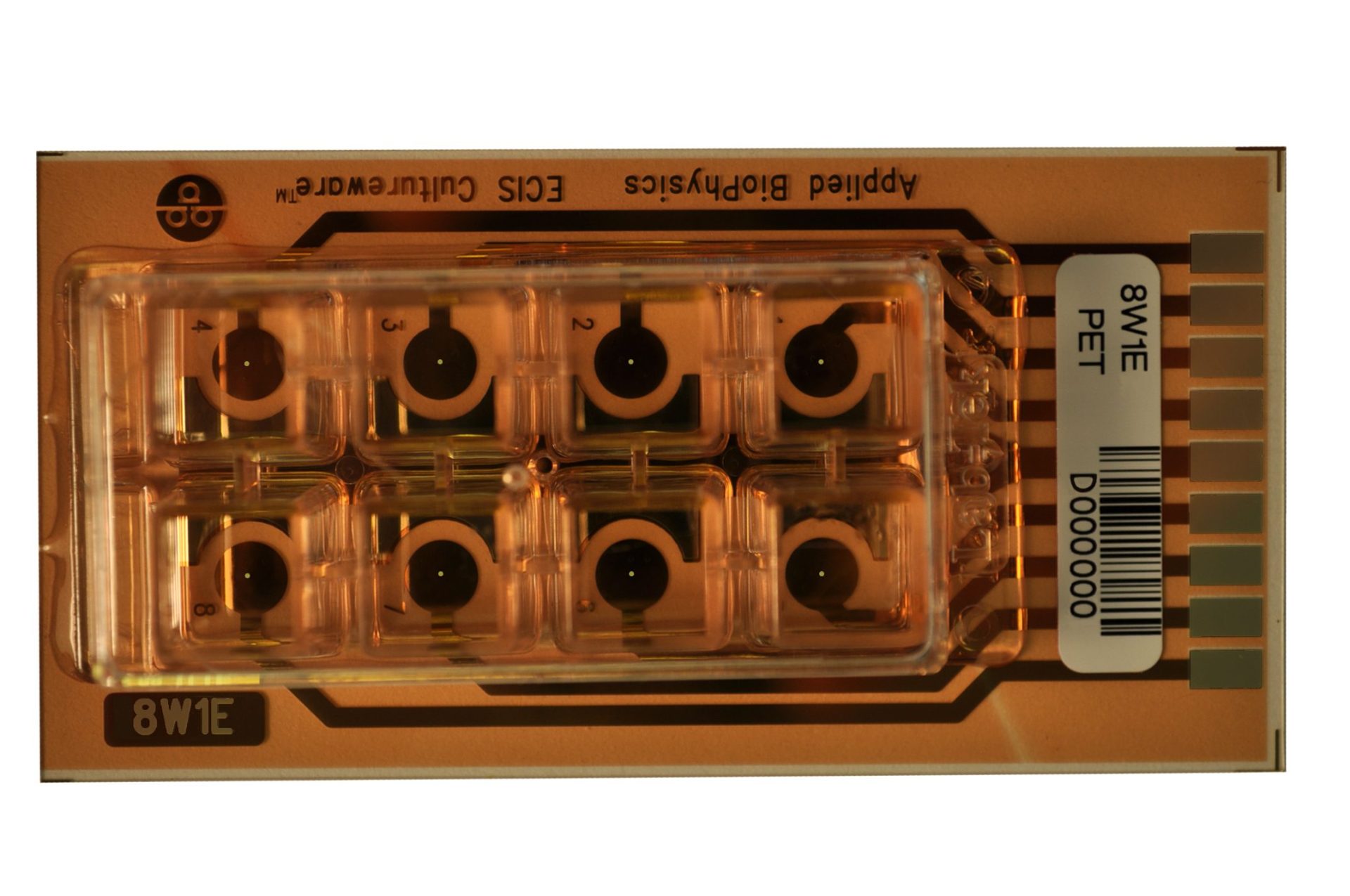
8W1E PET or PC

The 8 wells contain a single circular 250 Μm diameter active electrode each. Every well has a substrate area of 0.8 cm2 and a maximum volume of 600 Μl. On average, with a confluent cell layer, approximately 50 to 100 cells will be measured by the electrode, but even a single cell can be observed.

Application:
Barrier Function, Signal Transduction Assays, Cell Invasion, In situ Cell Electroporation and Monitoring, Cell Migration / Wound Healing, Correlated Microscopy and ECIS Experiments.

download ABP brochure here

8W10E PET or PC

The 8 wells contain ten circular 250 Μm diameter active electrodes connected in parallel on a common gold pad each. Every well has a substrate area of 0.8 cm2 and a maximum volume of 600 Μl. On average, with a confluent cell layer, approximately 500 to 1,000 cells will be measured by the electrodes.

Application:
Cell Attachment and Spreading, Cell Proliferation, Cell Differentiation, Barrier Function, Cell Invasion, Signal Transduction Assays, Cytotoxicity.

download ABP brochure here

8W10E+ PET or PC

The 8 wells have two sets of 20 circular 250 Μm diameter active electrodes located on inter-digitated fingers each to provide measurements of cells upon a total of 40 electrodes. Every well has a substrate area of 0.8 cm2 and a maximum volume of 600 Μl. On average, with a confluent layer, approximately 2000 to 4000 cells will be measured by the electrodes.

The 10E+ arrays are designed to monitor larger numbers of cells, sampling over the entire bottom of the well. Because of the relatively high number of cells, impedance fluctuations due to micromotion are smoothed out and do not obscure subtle changes in impedance due to the experimental conditions.

Application:
Cell Attachment and Spreading, Cell Proliferation, Cell Differentiation, Barrier Function, Cell Invasion, Signal Transduction Assays, Cytotoxicity, Cell-ECM Protein Interactions.

download ABP brochure here

8W20idf PET

The 8 wells have a total electrode area of
3.985 mm2 located on inter-digitated fingers (idf) each to provide measurements of cells. Every well has a substrate area of 0.8 cm2 and a maximum volume of 600 Μl. On average, with a confluent layer, approximately 4,000 to 8,000 cells will be measured by the electrodes.

The 8W20idf PET arrays are designed to monitor larger numbers of cells, sampling over the entire bottom of the well. Because of the relatively high number of cells, impedance fluctuations due to micromotion are smoothed out and do not obscure subtle changes in impedance due to the experimental conditions.

Application:
Cell Attachment and Spreading, Cell Proliferation, Cytotoxicity.

download ABP brochure here

Standard 96-Well Arrays

96W1E+ PET

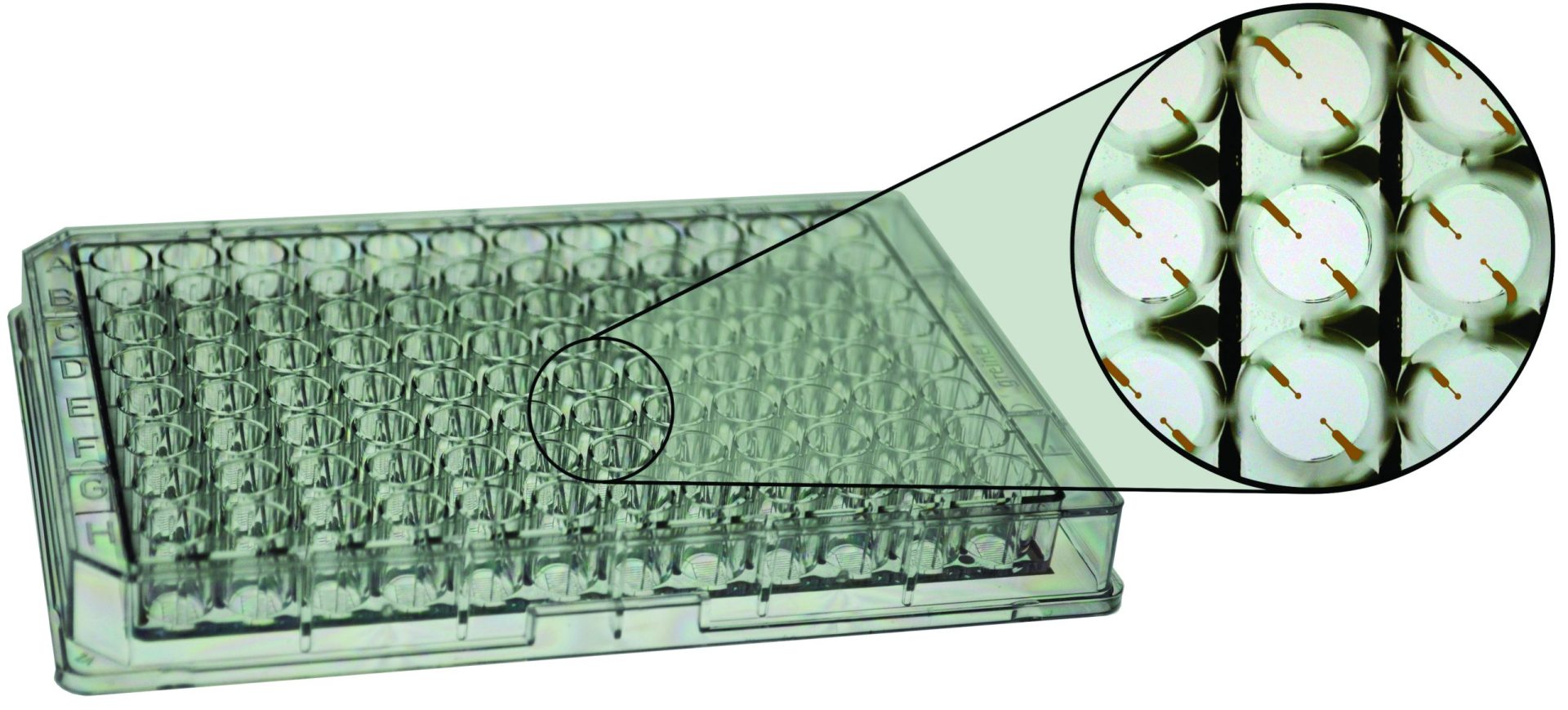
The 96 wells are configured in a standard plate format and contain two circular 350 Μm diameter active electrodes on a transparent PET substrate each (measuring from 100 – 200 cells). As with other 1E arrays, a major use of this array is for the ECIS® wound-healing assays where the small electrodes assure the high current pulse will result in complete cell killing.
Only a small population of cells is monitored on the small electrodes resulting in a fluctuating impedance signal due to the random like movement of the cells (micromotion).

Application:
Barrier Function, Signal Transduction Assays, Cell-ECM Protein Interactions, Cell Migration, Measurement of Micromotion, Detection of invasion of endothelial cell layers by metastatic cells, In situ Cell Electroporation and Monitoring.

download ABP brochure here

96W10idf PET

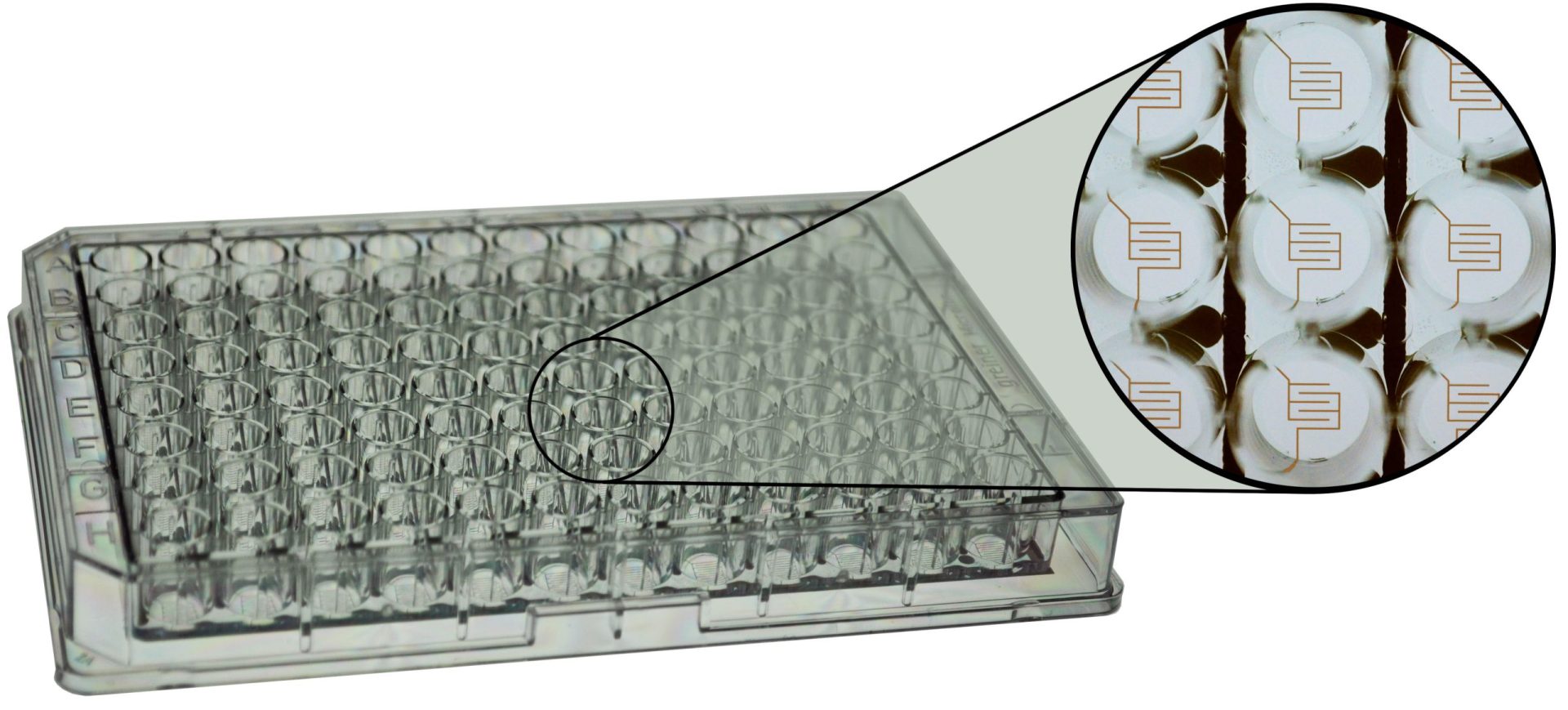
The 96 wells have an inter-digitated finger (idf) configuration each. The total electrode area is 2.09 mm2 which measures a maximum of 2,000 – 4,000 cells.

Application:
Barrier Function, Signal Transduction Assays, Cell-ECM Protein Interactions, Detection of invasion of endothelial cell layers by metastatic cells, Cell Proliferation.

download ABP brochure here

Special Arrays

8W2x1E PET oder PC – „Medusa Array“

This array is also called the Medusa Array. The wells in this array have two independent single 250 Μm diameter active electrodes each. The Medusa Array is useful for duplicating readings in the same well or to wound/electroporate one electrode while leaving the other as a control within the same well.

When connected to the array holder only the upper four wells are measured. To use the other four wells, the array is turned around and the contact pads at the other end are connected.

Application:
Barrier Function, Signal Transduction Assays, Cell Invasion, In situ Cell Electroporation and Monitoring, Cell Migration / Wound Healing, Correlated Microscopy and ECIS Experiments.

download ABP brochure here

8W1CXE PET or PC

This array is used to monitor the movement of cells in response to chemical gradients and is used in chemotaxis measurements first described by Hadjout, N. et al. (2001) Biotechniques 31 (5) 1130. The measuring electrode in this array is a thin gold line between two registry marks.

The wells have a substrate area of 0.8 cm2 and a maximum volume of 600 Μl. On average, with a confluent layer, approximately 50 to 100 cells will be monitored by the electrode.

Application:
Cell Chemotaxis

download ABP brochure here

8W2LE PET or PC

The 8 wells contain each a single linear electrode with dimensions of 667 Μm x 150 Μm and a measurement value equal to that of standard 250 Μm circular electrodes. The wells have a substrate area of 0.8 cm2 and a maximum volume of 600 Μl. On average, with a confluent cell layer, approximately 200 to 400 cells will be measured by the electrode, but even a single cell can be observed.

Application:
Cell Migration / Wound Healing, Correlated Microscopy and ECIS Experiments.

download ABP brochure here

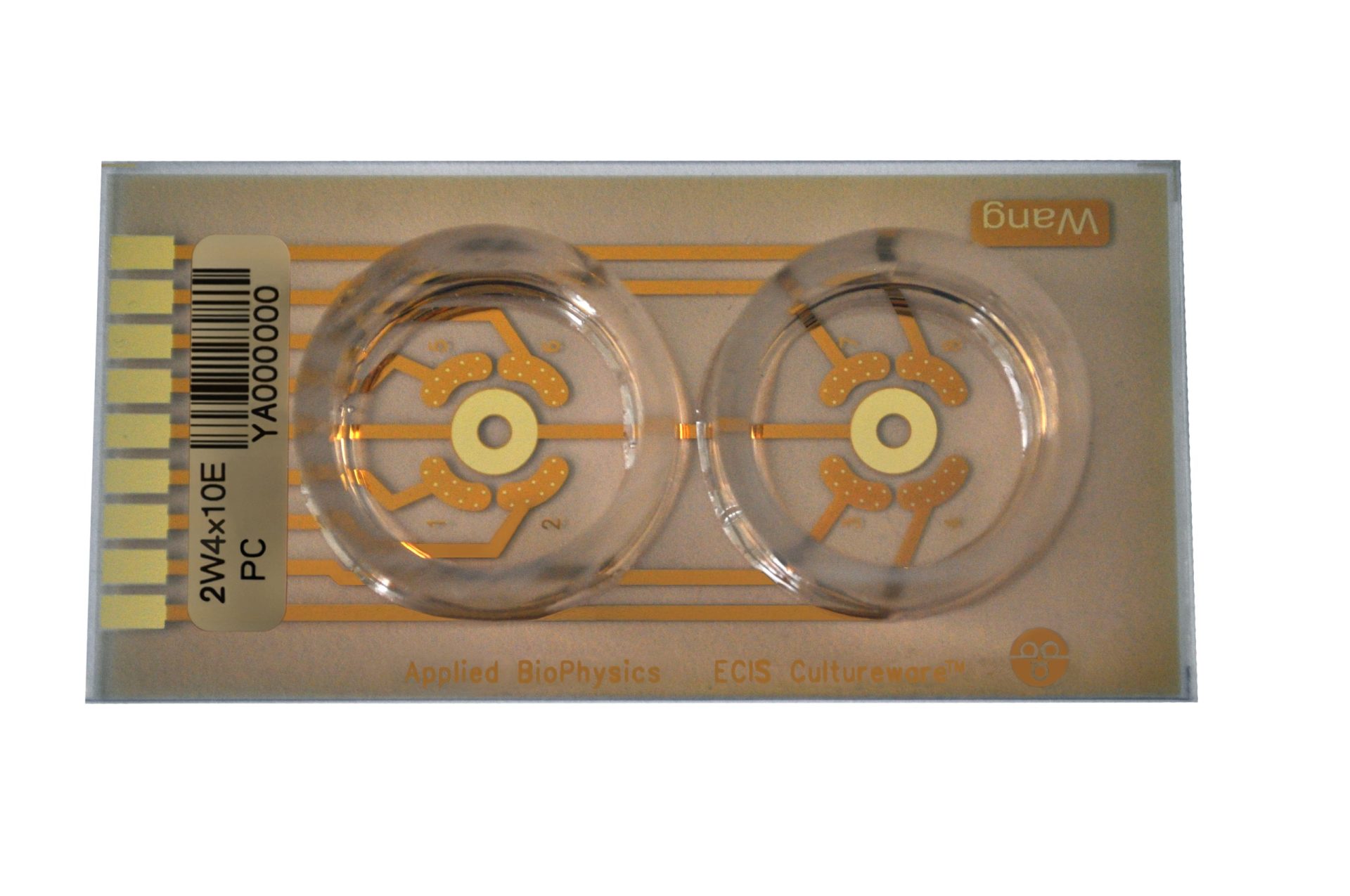
2W4x10E PET

The 2 circular 25 mm diameter wells contain four independent sets of ten 250 Μm diameter active electrodes each measuring from 2,000 – 4,000 cells. In addition, the 2W4x10E array is useful for duplicating readings in the same well or to wound/electroporate one electrode while leaving the other as a control within the same well.

Application:
Barrier Function, Signal Transduction Assays, Cell Invasion, Cell Attachment and Spreading, Cell Proliferation, Cell Differentiation, Cytotoxicity, Correlated Microscopy and ECIS Experiments.

download ABP brochure here

Flow Arrays

Flow Arrays are designed for ECIS® measurements of cells under perfused conditions or to mimic the shear stress endothelial cells experience in vivo.

1F8x1E PC

This is a specialized flow array having 8 active 250 Μm diameter electrodes (each measuring from 50 – 100 cells) located in the central region at the base of a flow channel measuring 50 mm in length, 5 mm in width and 0.36 mm in height with a total channel volume of 90 Μl.

Application:
Barrier Function, Signal Transduction Assays, Cell Invasion, In situ Cell Electroporation and Monitoring, Cell Migration / Wound Healing, Cell Proliferation, Cell Differentiation, Cytotoxicity.

download ABP brochure here

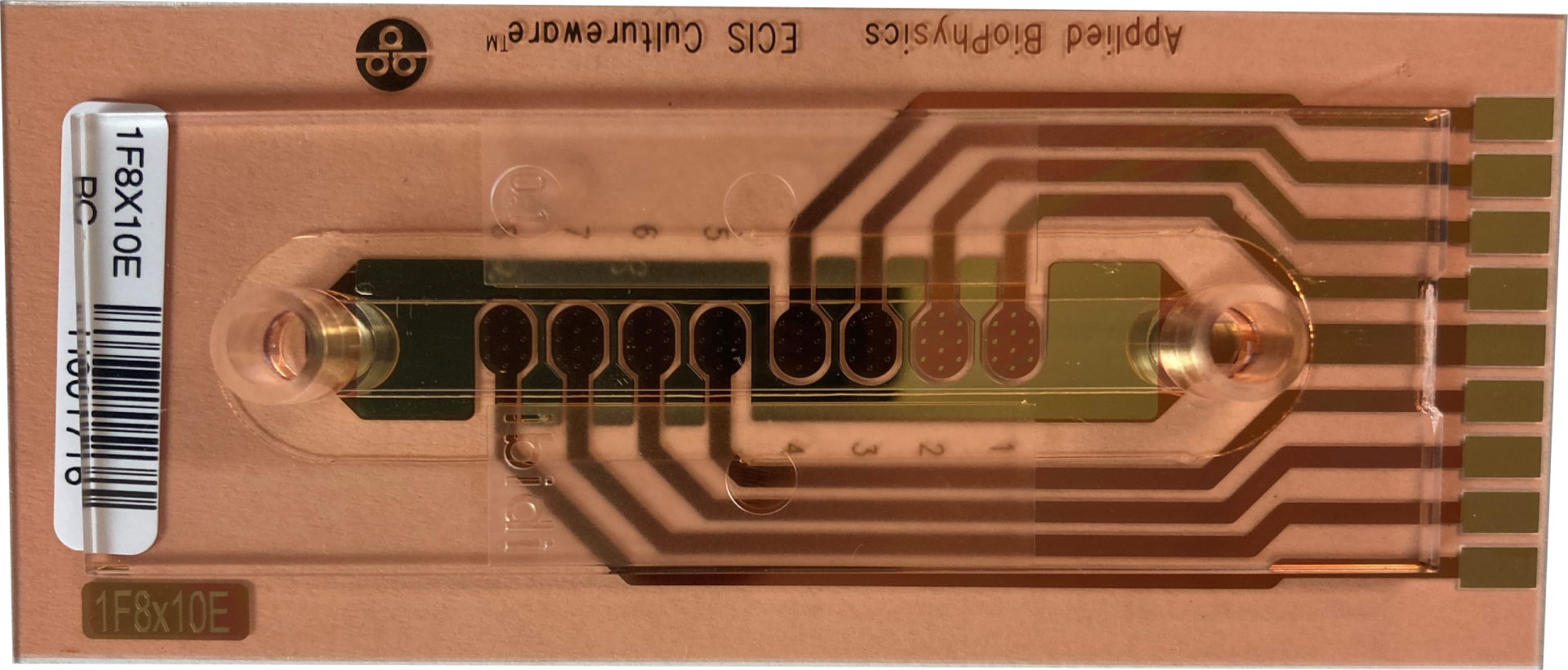
1F8x10E PC

This is a specialized flow array having 8 sets of 10 active 250 Μm diameter electrodes (each measuring from 500 – 1,000 cells) located in the central region at the base of a flow channel measuring 50 mm in length, 5 mm in width and 0.36 mm in height with a total channel volume of 90 Μl.

Application:
Barrier Function, Signal Transduction Assays, Cell Invasion, In situ Cell Electroporation and Monitoring, Cell Migration / Wound Healing, Cell Proliferation, Cell Differentiation, Cytotoxicity.

download ABP brochure here

1F2Y8x10E PC

This flow array is intended for bifurcation studies and blood vessel simulation. It splits into a 30-degree Y-channel in one direction and a 45-degree Y-channel in the other direction.

The array is double ended with 8 measurement channels available at each end. Eight measurement points, each with 4 circular active electrodes (with an area of 0.49 mm2 measuring from 500 – 1,000 cells, the area is the same as a 10E electrode), are located along the channel and through the Y-portion of the channel. One end of the array is used to monitor the 30-degree Y-channel and the other end is used to monitor the 45-degree Y-channel. The electrodes are located close in the corners of the flow direction transition points. The channels have a volume of 165 Μl with 60 Μl of reservoirs. The flow is always laminar, i.e., turbulent flows are not possible. For simulation of turbulence flow we recommend oscillating the flow.

Recommended for the following applications under shear stress conditions:

  • Simulation of the bifurcation of blood vessels for arteriosclerosis research
  • Rolling and adhesion of leukocytes on endothelial cells cultured under flow
  • Cell-cell interaction studies and cell-drug interaction screenings under flow conditions


download ABP brochure here

Erweiterte Suche

Nutzen Sie die erweiterte Suche, um gezielt nach Produkten und Herstellern in unserem Sortiment zu filtern. Geben Sie einfach den gewünschten Hersteller ein oder verwenden Sie die verfügbaren Filter, um Ihre Auswahl einzugrenzen. So finden Sie schnell und präzise das passende Laborgerät für Ihren Bedarf.

Advanced Search

Use the advanced search to filter specific products and manufacturers in our range. Simply enter the desired manufacturer or use the available filters to narrow down your selection. This allows you to quickly and accurately find the right laboratory equipment for your needs.

This site is registered on wpml.org as a development site. Switch to a production site key to remove this banner.