


Newsletter
CO2-, Microbiology- and Large Capacity Roll-In Incubators and Anaerobic Chambers from ShelLab
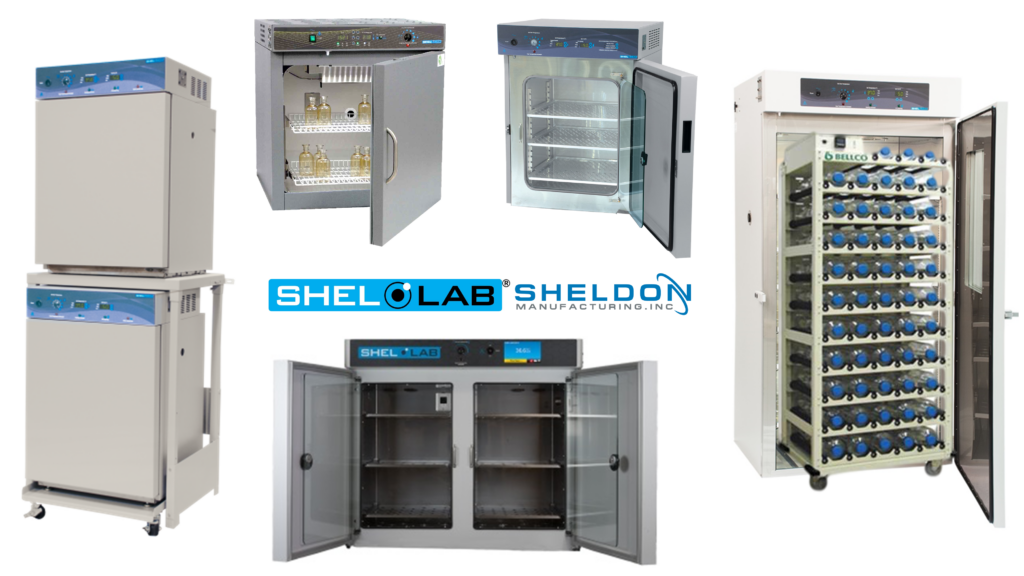
Dunn Labortechnik presents the contemporary ShelLab product range of precisely controlled and user-friendly high quality Incubators for Microbiology, CO2-Incubators for Cell Culture Applications, Large Capacity Roll-In Incubators and the well-known range of BACTRON / BACTROX Anaerobic and Hypoxia Chambers with integrated workspace and/or side incubators.

The ShelLab product range includes:
- CO2-Incubators; air-jacketed or water-jacketed models, including units with dry heat decontamination cycle
- Easy-to-clean and reliable high precision Microbiology Incubators
- Energy-saving Refrigerated B.O.D. and Drosophila Incubators
- Large Capacity Roll-In Incubators for the use with Roller Apparatus (also available from Dunn Labortechnik)
- BACTRON Anaerobic Chambers and the BACTROX Hypoxia Chamber including the new high performance anaerobic chamber Batron400HP
NEW! Ampha X10 from Amphasys
Precise and Portable Yeast Analysis within One Minute

The new Ampha X10 from Amphasys, can analyse yeast cells rapidly and reliably, directly on-site. Within one minute you can simultaneously determine cell count, cell viability, and exponential growth of Saccharomyces in your sample. The system measures single cells with electrical impedance. Therefore, no staining procedure or incubation time is needed.
► Built for fermentation operations.
The portable and battery powered system is specifically designed for breweries. It can be utilized to monitor the fermentation process and to control batch-to-batch consistency. Further, the Ampha X10 supports the user in making data-based pitching decisions as well as determining harvest-yeast reuse, without the need for a lab directly at the fermenter. The intuitive touchscreen and guided wizards simplify the usage and the automated analysis.
► Do not leave your pitching to guesswork.
With the integrated pitching calculator, you can determine the exact quantity of yeast to add based on dilution factor, batch volume, original gravity (°P), target pitching rate (M/ml/°P), and viable yeast in your sample. No separate viability adjustment needed. Prevent overpitching and underpitching by using real data for your brewing process!

Product Highlights from our Immunoreagent Suppliers

Innovative Research expands their portfolio of animal-free alternatives. While animal-derived proteins are still an integral part of research, animal-free alternatives like recombinant proteins, enzymes, cytokines, and growth factors can reduce experimental variability, improve reproducibility, and simplify compliance with quality standards, making them valuable tools for both basic research and translational studies.
ICL (Immunology Consultants Laboratory) developed two NEW ELISA kits for host cell protein detection: E-65LAL, which quantifies Lysosomal Acid Lipase (LAL), and E-65TGB for targeted detection of for targeted detection of Transforming Growth Factor Beta-1 (TGF-β1).
Due to their biological activity, residual LAL and TGF-β1 from host cells in biopharmaceutical products can impact not only product shelf life and stability, they also pose a potential safety concern for patients. Therefore, detection and efficient removal during production is key.
Meridian Bioscience launched their NEW AssayProven™ reagents portfolio. This portfolio is a set of curated, matched assay components, selected by extensive clone screening and pair evaluation, validated in relevant assay formats, with development-ready characterization data. The Assay-ready component sets help streamlining your assay design, reduce sourcing complexity, and minimize compatibility questions.
Moss now introduces their NEW OLIGO-Conjugation kit, as an addition to their AP-, APC-, Biotin-, FITC-, HRP-, and PE-Link kit products. Whether you need 0.1 mg or 10 mg of conjugate, with this new conjugation kit you can create your own IgG-OLIGO conjugates in a few simple steps. Thanks to the scalable and robust chemistry used, the produced conjugates are highly reproducible.
⋙ Ongoing Promotions ⋘

Innovative Research – “Back to the Lab” Sale
Duration: until the end of October
Enjoy returning to the lab from your summer vacation and save up to 25 % bulk discount on ELISA kits for your project!
If you only need one single kit you can still profit from 15 % off.

Flexcell – Stock up on Consumables and Save on Systems
Duration: until the middle of November
Stress your cells and not yourself! Receive additional discounts on your Flexcell quote, whether it is for a system, or for consumables.

Global N-Biotek – Large Savings on Incubators and Shakers
Duration: until the end of November
If you are thinking of upgrading your cell culture capabilities, now is the time! Whether you are looking for a portable CO2-incubator like the MiniCell, remote-controlled shakers or large capacity shaking incubators; all Global N‑Biotek devices are part of the promotion!
Upcoming Exhibitions
D-A-CH EV Meeting 2026
28th – 30th September, Neues Hörsaalgebäude, Ulmenweg 18, 91054 Erlangen, Germany
- Main exhibits:
- ExoDiscovery / ExoDisc System (LabSpinner)
- MiniCell (Global N-Biotek)
„LAB-SUPPLY” Freiburg
21st October, Trade Fair Freiburg, Neuer Messeplatz 1,
79108 Freiburg im Breisgau, Germany
- Main exhibits:
- MiniCell Incubator (Global N-Biotek)
- 5-position shaker (Bellco Glass)
- “GlucCell™” Glucose measuring device and test strips
- “BelloCell” Culture Flasks (Esco Bioengineering)
- Plates: Assay, Deep-Well, SPE and Reservoirs (Porvair Sciences)
- Glassware for cell culture, standard and chemical laboratories (Bellco Glass, Chemglass Life Sciences)
- Microscope slides and other laboratory helpers